Collections Fell 70%. The Agent Said Why Before He Asked.
Inside a two-office pediatric dental practice, the morning scoreboard showed a scary drop and, in the same email, named the bucket it fell out of.
By RocketHub Content Studio · 2026-10-08 · 3 min read
I spend my days watching agents run inside real companies. Not demos, not sandboxes. Real businesses with real payroll, where a number on a screen decides how the owner's whole day goes. This one comes from a two-office pediatric dental practice, and it's the cleanest example I've seen of the gap between a report and an answer.
The Issue
Every practice owner knows the feeling. You check your numbers first thing, before the first patient sits down, and one of them is ugly. Collections are down. Not a little. Way down, at both offices, compared with the same day the week before.
Now the morning is gone. Is a front-desk process broken? Did patients stop paying at checkout? Did production fall off a cliff and nobody said anything? A number like that, with no explanation attached, turns an owner into an investigator. He opens the practice-management system, starts pulling reports, and texts his office manager to ask what happened. Meanwhile the schedule is full and the kids are already in the waiting room.
That is the real cost of most dashboards. They tell you something moved. They almost never tell you where it moved from, so the most expensive person in the building ends up doing the digging.

How the Agent Applied It
This practice has an agent that builds the owner's morning scoreboard. It reads the practice-management system live, one office at a time, and it never blends the two offices into one number, because a combined figure hides exactly the problem an owner needs to see.
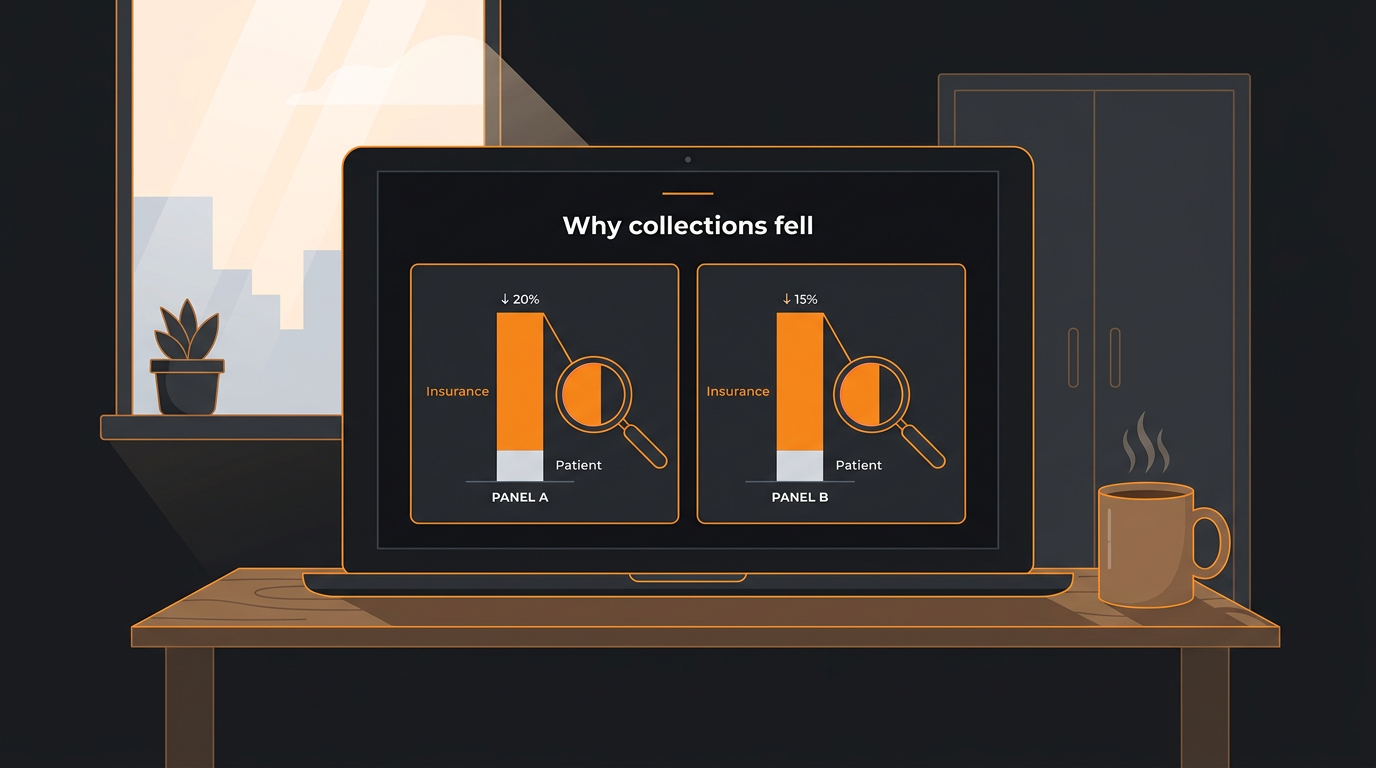
On a recent Monday, comparing against the Monday before, collections came in down about 68% at one office and about 74% at the other. A plain report would have stopped there. This agent didn't. In the same email, under a line that read, in plain words, why collections fell, it had already done the split the owner would have done himself:
- Collections broken into patient payments and insurance payments, for each office separately
- The drop pinned to insurance receipts at both offices, not to what patients paid at the desk
- Production checked alongside it, and at one office production was actually up and on goal for the day
Nobody asked it to investigate. Explaining a big swing is simply part of how this scoreboard is built, so when the number moved, the reason showed up with it.
The Business Outcome
~70% collections drop at both offices, traced to insurance receipts in the same morning email
Here's what changed for the owner. The scary number arrived with its cause attached. The front desk didn't break. Patients didn't stop paying. The team didn't have a bad day in the chair. The money that didn't land that day was insurance money, and anyone who has run a practice knows insurance payments don't arrive on a smooth schedule.
So instead of losing a morning to detective work, he knew exactly which question to ask and who to ask it of: is this a normal lull in insurance deposits, or is something stuck with a payer? That's one conversation with the billing side, not a practice-wide fire drill.
I want to be careful not to oversell this. The agent didn't fix anything, and it didn't claim to know why the insurers paid less that day. What it did is the thing a sharp office manager does on a good day: look one layer under the number before handing it to the boss. Done every morning, without being asked, at both offices.
This is what I mean when I talk about an integrated workforce. Not a chatbot you go and ask. A teammate that already did the first ten minutes of thinking before you opened your inbox.
Take the interview and preview your integrated workforce
Kyle Stockwell — CGO, RocketHub.ai